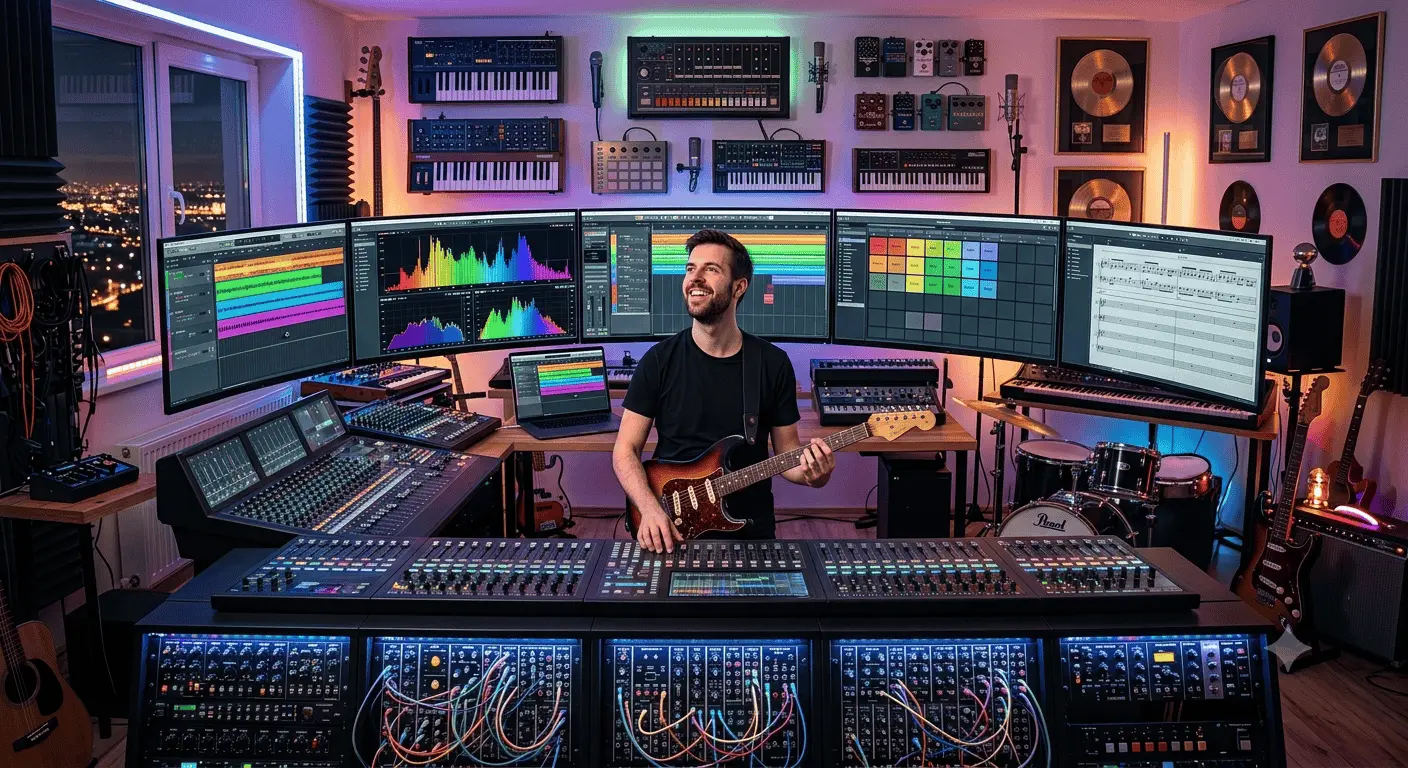
Prepare remix stems
Separate vocals, drums, bass, and instruments before arranging, muting, processing, or rebuilding sections.
Start with the musical part you need to hear, remove, or export. Then choose the separation depth that gives enough control without adding extra tracks to manage.
Separate vocals, drums, bass, and instruments before arranging, muting, processing, or rebuilding sections.
Preview individual outputs before deciding what belongs in a sample, edit, reference, or new session.
Start with separated references instead of spending the first stage of a session trying to isolate the target part manually.
Choose the song, rehearsal recording, or media file you want to break into parts.
Use 2 tracks for a quick split, or choose 4 or 6 tracks when the arrangement needs deeper control.
Listen for bleed or artifacts and decide which outputs are useful for the next task.
Use the web tool, Google Play app, or App Store app depending on where the session is happening.
These pages are audience-specific because each musician listens for different details and needs different outputs from the same source recording.
Bring vocals, drums, bass, and instrument groups into a session so arrangement decisions are easier to make.
Use separated parts as references or rough source material while respecting the rights tied to the original recording.
Break down how the original production balances rhythm, harmony, melody, and vocal focus.
Share clearer references when discussing what should be kept, muted, replayed, or replaced.
A mixed song does not contain perfect original multitracks. NeuralSound estimates the parts from the finished file, so dense arrangements, effects, and overlapping frequencies can leave bleed or artifacts.
Preview each result before turning it into a lesson, rehearsal track, backing part, remix source, or performance reference.
Related workflows: AI music editor, AI stem splitter, audio separation.
They can split a finished mix into useful outputs for remix prep, arrangement study, sampling references, and session planning.
No. AI-separated stems are estimates from a finished mix. Use original multitracks when you have them.
Start with the smallest useful split. Use 2-track for vocal and instrumental, 4-track for broad remix control, or 6-track when guitar and piano need their own outputs.
Only if you have the rights to the source recording and composition. Separation does not provide licensing permission.